
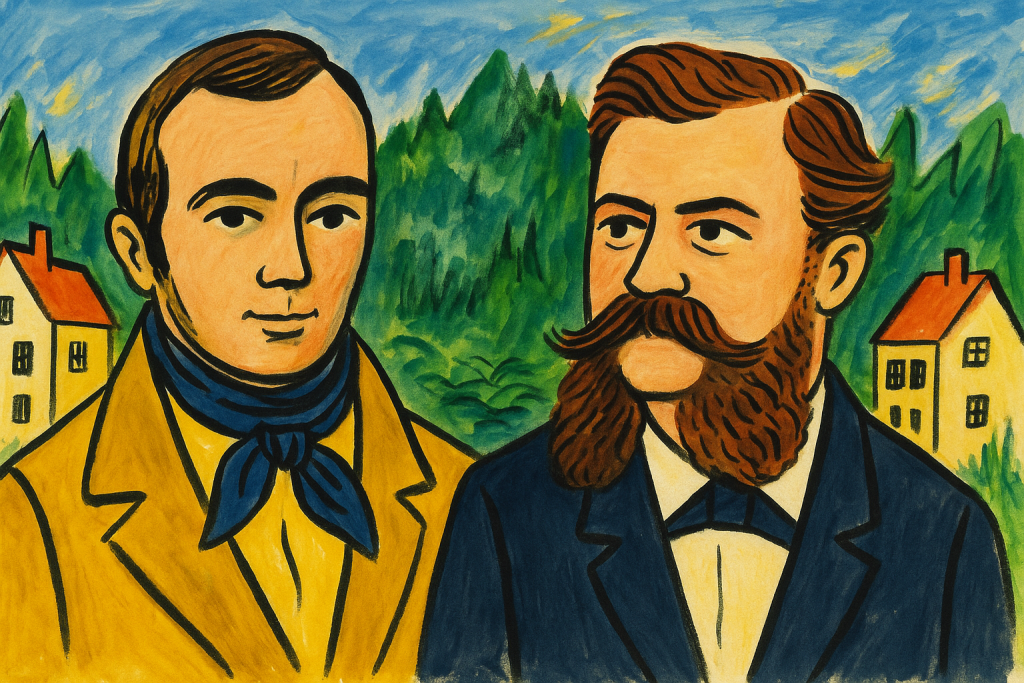
The story begins in 1832, when Auguste Agassiz joined a collective of watchmakers in the Swiss village of Saint-Imier. At the time, local watchmaking followed the établissage system: independent craftsmen worked from their homes to produce parts, which small workshops later assembled. Agassiz sought to streamline and improve this fragmented approach, laying the structural foundation for the company that would become Longines.
In 1852, leadership passed to Agassiz’s nephew, Ernest Francillon, who recognized that the future of watchmaking lay in centralized, industrial production. Influenced by early factory models emerging in the United States and elsewhere in Europe, Francillon consolidated manufacturing “under one roof” to ensure consistency, quality control, and technological advancement.
Les Longines: A Factory That Became a Legacy (1867–1889)
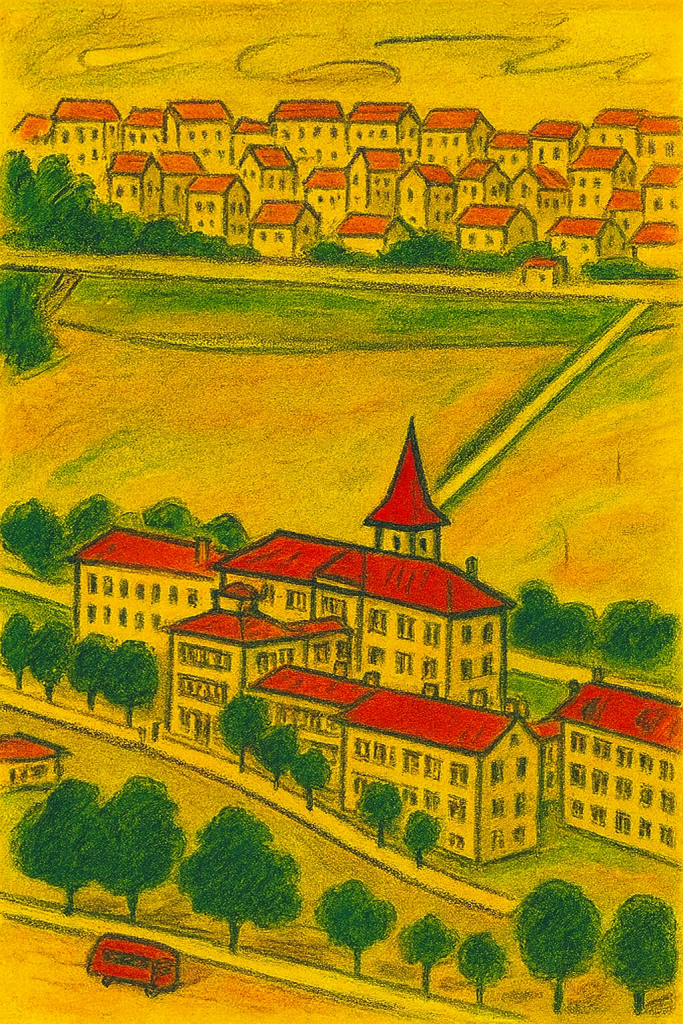
Francillon selected a plot of land on the outskirts of Saint-Imier known as Les Longines (“the long meadows”), where in 1867 he inaugurated the brand’s first full-scale factory—still the headquarters of Longines today. That same year, the company produced its first in-house movement, the award-winning 20A, introduced at the Universal Exhibition in Paris.
His forward-thinking approach extended beyond engineering. Francillon implemented serial numbers to fight counterfeiting and, in 1889, trademarked both the Longines name and its winged hourglass logo. This remains the world’s oldest unchanged, still-active trademark registered with WIPO.
A Pioneer in Precision Timing (1880’s–1930’s)
By the late 19th century, Longines had become a leader in precision timekeeping, particularly in the United States where its stopwatches gained prominence in horse racing circles. The brand’s reputation for accuracy led to a partnership with the International Olympic Committee in 1912, making Longines one of the earliest suppliers of official Olympic timing.
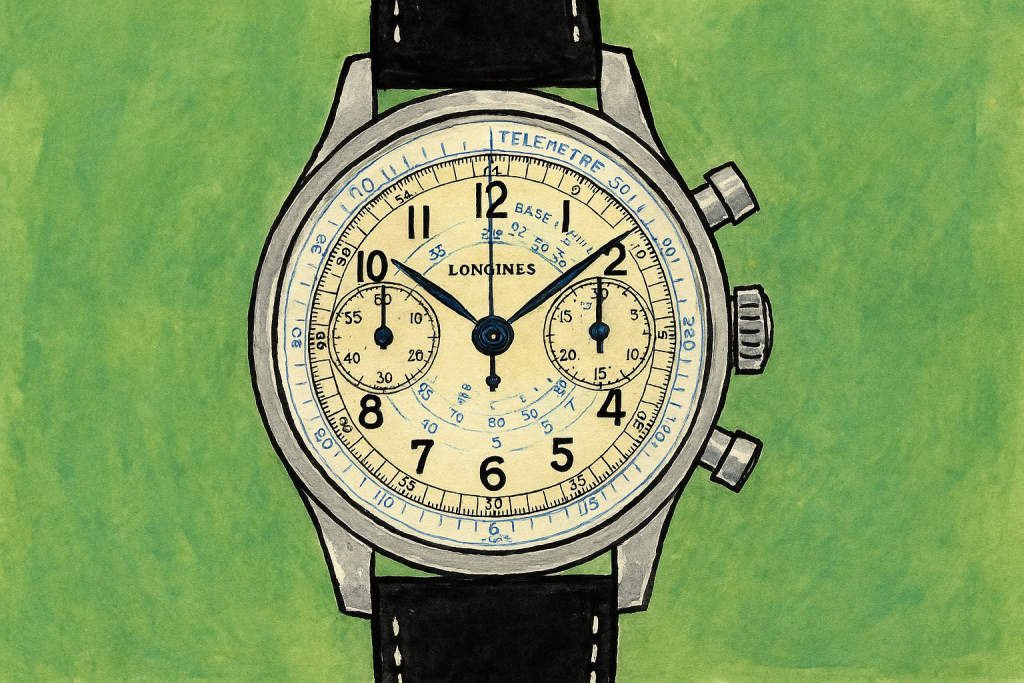
Innovation in chronograph movements followed quickly. The 13.33Z, introduced in 1913, became the first wristwatch chronograph movement ever produced. Three years later, in 1916, Longines released a high-frequency stopwatch measuring 1/10th of a second—an extraordinary achievement that cemented its role in sports chronometry.
Throughout the 20th century, Longines served as a principal timekeeper across equestrian events, alpine skiing, gymnastics, and even Formula 1 during the 1980s, continually refining the technology that underpinned competitive sport.
In 1936, Longines introduced the groundbreaking 13ZN, one of the most advanced chronograph calibers of its era and today a prized movement among collectors.
Aviation and Exploration (1920’s–1940’s)
Longines also played a defining role in the early age of aviation. After Charles Lindbergh’s historic 1927 transatlantic flight, he collaborated with Longines on the development of the Lindbergh Hour Angle watch—a wrist-worn navigation instrument enabling pilots to calculate longitude using GMT and celestial observations. Its enormous 47mm case ensured legibility in cramped cockpits and extreme weather, reflecting the functional needs of aviation’s pioneering era.
Postwar Design and the Rise of Iconic Collections (1950’s–1980’s)
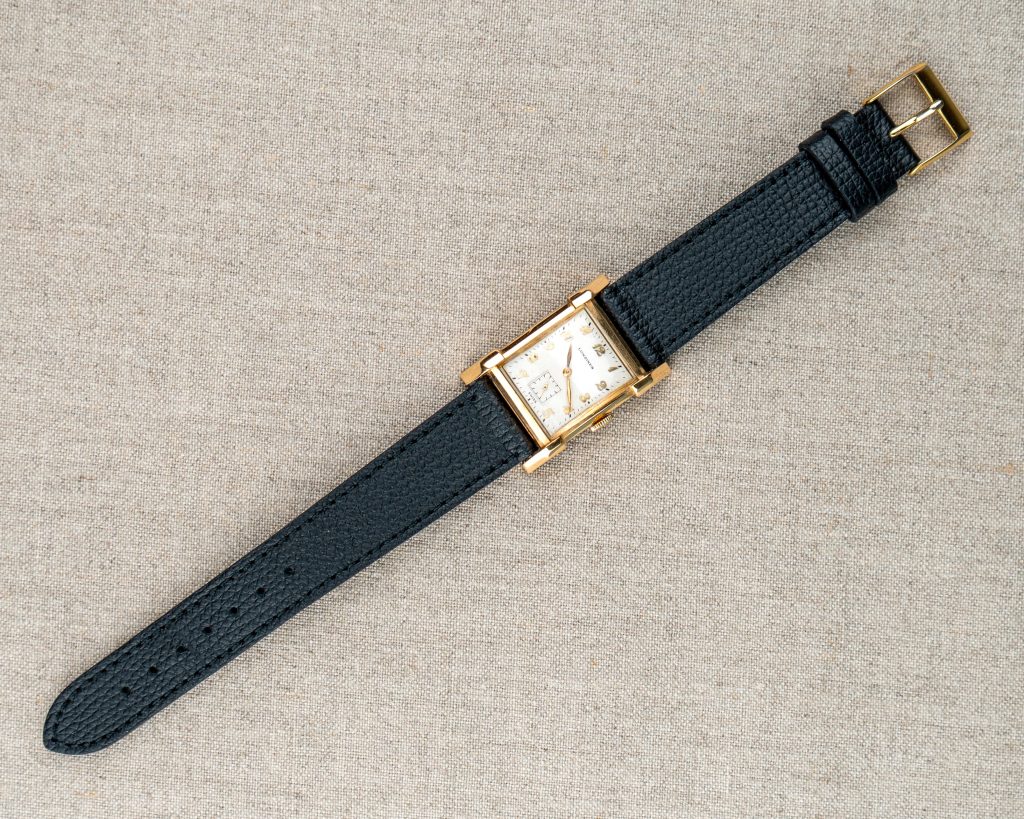
As wristwatches became widely adopted in the postwar decades, Longines expanded into purpose-driven yet stylish modern collections:
- Conquest (1954 – Present): Longines’ answer to the Rolex Datejust—an elegant, sporty “go anywhere, do anything” watch blending tool-watch practicality with refined aesthetics.
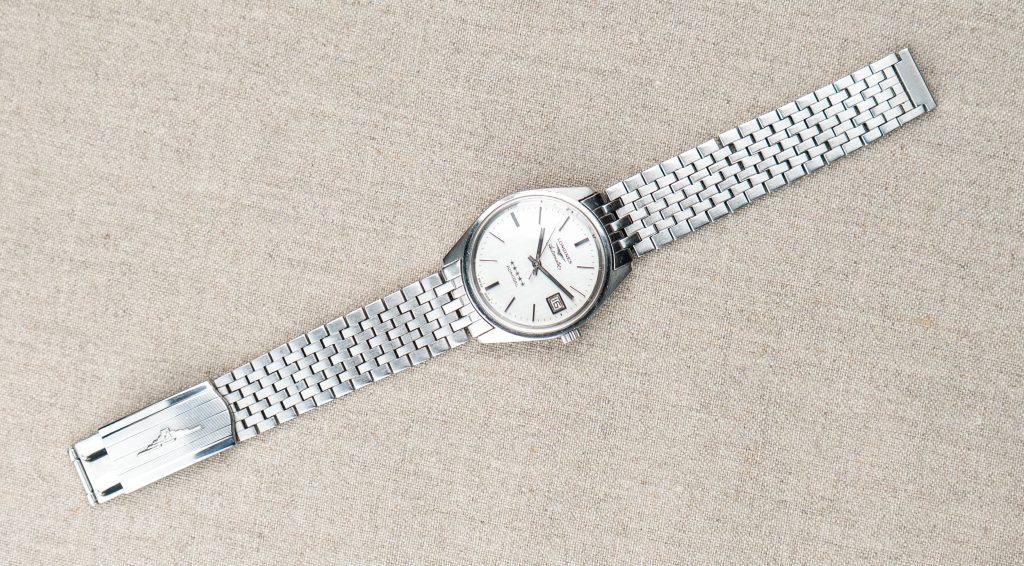
- Admiral (late 1950’s): Distinguished by its five-star emblem, this line catered to a new jet-setting global clientele seeking durability, sophistication, and international flair. The Admiral grew into one of Longines’ most recognizable families through the 60s, 70s, and 80s.
- Flagship Collection (1957 – Present): A dress-focused collection emphasizing slim profiles and refined design.
- Today’s Flagship Heritage models draw directly from these 1950s designs.
- Admiral Collection (Late 1950’s – 2010’s): Recognizable by the five-star logo. They were sporty yet elegant, often automatic with robust movements.
- Ultra-Chron (1960’s – Present, Relaunched 2022): High-frequency (36,000 vph) tool watches designed for extreme accuracy. Longines revived Ultra-Chron in 2022 with a modern dive reinterpretation.
- Longines Diver & Skin Diver Watches (1950’s–1970’s; Reissued 2018): Early mechanical divers that are now staples of vintage collecting and Longines’ Heritage reissues.
- Longines “Nautilus” / Longines 990 Era (1970’s–1980’s): A run of integrated-bracelet steel sports watches (pre-quartz crisis), now rediscovered by collectors.
Even into the 21st century, the Admiral line maintained cultural relevance; in 2010, tennis legend Gustavo Kuerten wore a modern Admiral Chronograph Ceramic during the French Open before the collection was eventually discontinued.
Modern Era: Tradition Refined (2000’s–Today)
Longines entered the 21st century by embracing its heritage while offering accessible luxury. In 2005, it introduced The Master Collection, a flagship line emphasizing traditional watchmaking values, including classical styling, elegant complications, and timeless aesthetics. These models offered a more approachable alternative to high-end dress watches from brands like Patek Philippe while staying true to Longines’ roots.
Today, Longines continues to balance innovation with tradition. Its Heritage line reinterprets iconic vintage pieces such as the Lindbergh, the Weems, the Legend Diver, and classic chronographs, appealing to enthusiasts who value authentic historical design. Meanwhile, the brand maintains a strong presence in global sports timing and remains a pillar of the Swatch Group’s premium segment.
A Legacy Still Moving Forward
Across nearly two centuries, Longines has evolved from a regional assembler of hand-made components to a globally recognized manufacturer synonymous with elegance and precision. Whether pioneering industrial watchmaking, shaping the standards of sports timing, collaborating with aviation heroes, or producing beloved modern collections, Longines has consistently fused technological progress with refined design.
The winged hourglass endures today not only as the oldest registered trademark of its kind, but as a symbol of one of Switzerland’s richest and most enduring horological legacies.
MP Knowlton is deputy editor of GAUTHIER’S Vintage Watches & Culture.