TL;DR
Omega’s Naiad and Medicus watches represent two important innovations of the 1930s: improved water resistance and the introduction of a centrally mounted seconds hand, originally developed for medical professionals. They combined practical engineering with the elegant design language of the period, and these watches helped establish the foundations of the modern wristwatch. Long overshadowed by the Seamaster and Speedmaster, they remain historically significant, beautifully understated, and compelling examples of early Omega ingenuity.
Before the Seamaster: The Remarkable Story of Omega’s Naiad and Medicus
The 1930s represent one of the most consequential periods in the history of wristwatch development. Having only recently emerged from the shadow of the pocket watch, the wristwatch was beginning to establish an identity of its own. Manufacturers were experimenting with new case designs, more robust movements, and innovations intended to make watches better suited to the demands of everyday life. Among the most important developments were improvements in water resistance and the introduction of the centrally mounted seconds hand, two features so commonplace today that their historical significance is easily overlooked.
Omega was at the forefront of both developments. Through its Medicus and Naiad watches, introduced during the latter half of the decade, the Swiss manufacturer helped establish a new philosophy of watchmaking, one in which practical utility and mechanical innovation could coexist with the elegance of traditional Swiss design.
Today, these relatively unassuming watches offer a fascinating glimpse into the formative years of the modern wristwatch, representing an important chapter in Omega’s history, decades before the Speedmaster and Seamaster would become household names.
The Medicus: A Watch Designed for a Purpose
In 1936, Omega introduced the caliber 23.4 SC, its first wristwatch movement equipped with a centrally mounted seconds hand. The innovation was deceptively simple, yet represented a meaningful departure from conventional watchmaking.
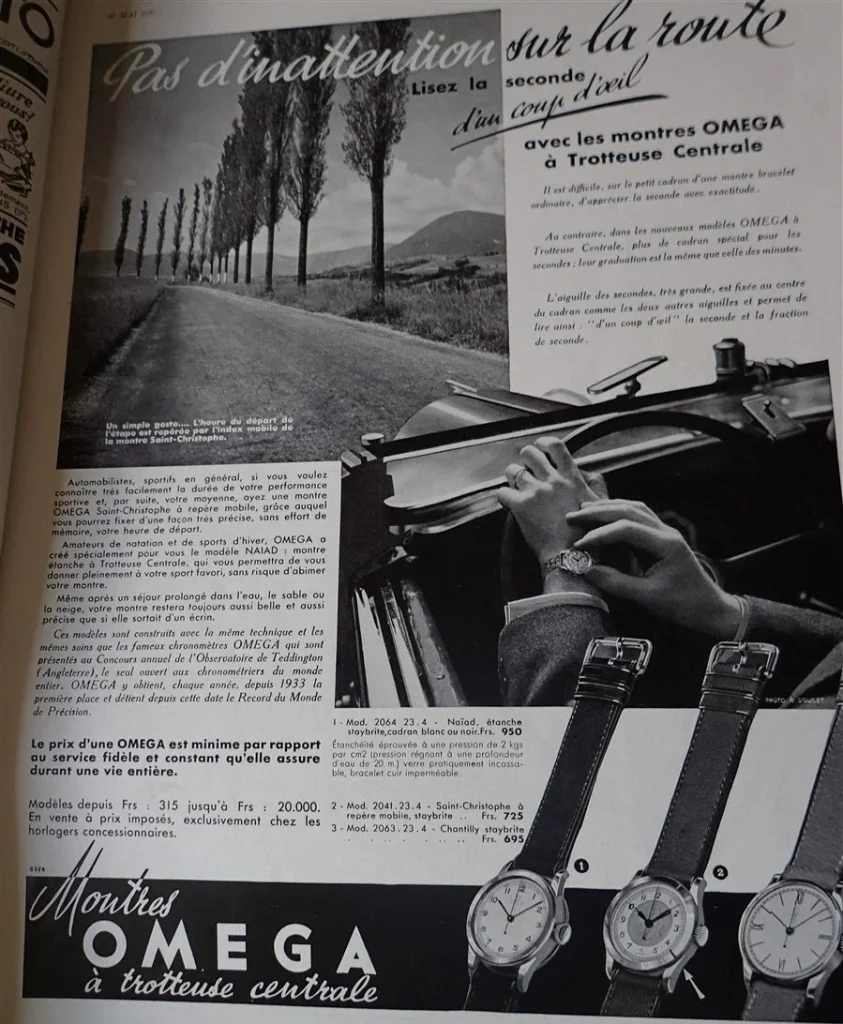
In the early decades of the twentieth century, most wristwatches retained the layout inherited from pocket watches, with hours and minutes displayed centrally and if they had a seconds-hand, the seconds were indicated on a small subsidiary register, typically positioned at six o’clock. While perfectly adequate for ordinary timekeeping, this arrangement presented limitations for professionals who needed to measure short intervals accurately.
Physicians, in particular, required an easily legible seconds indication when measuring a patient’s pulse. Reading a small subsidiary dial could be cumbersome, especially in poor lighting or during medical examinations.
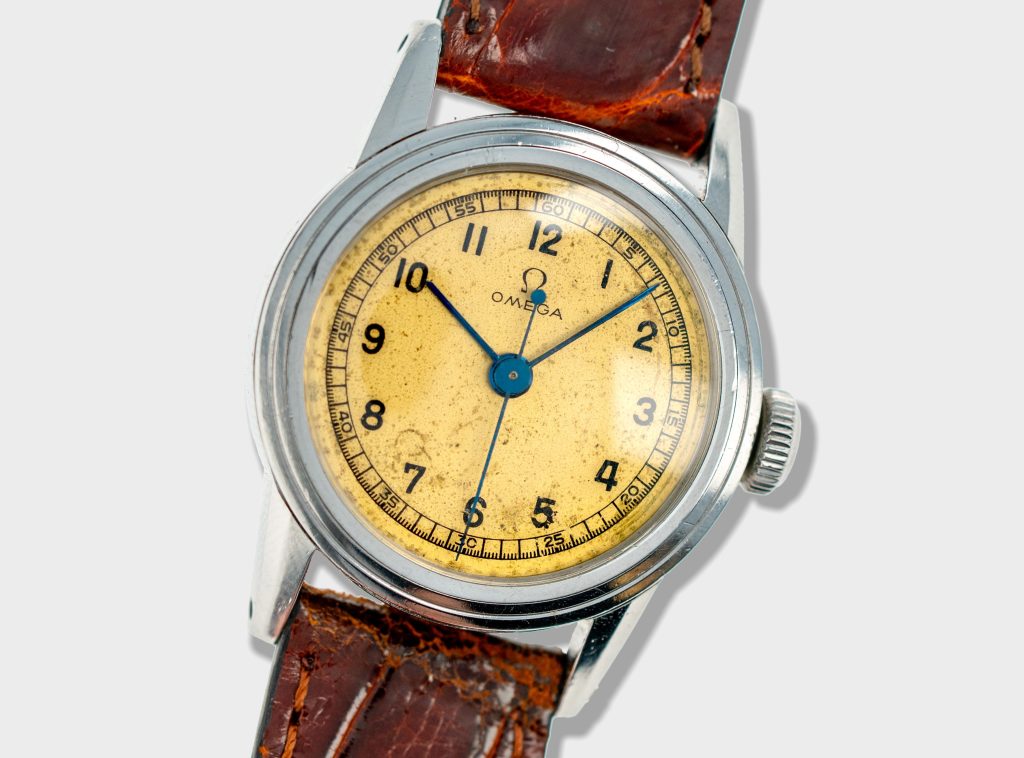
Omega’s solution was to relocate the seconds hand to the center of the dial, allowing it to sweep across a considerably larger circumference. Combined with clearly delineated minute tracks and highly legible numerals, this arrangement made measuring a patient’s pulse considerably easier.
The resulting watches became known as the Medicus, a reference to their intended association with the medical profession.
The significance of this development should not be underestimated. Although centrally mounted seconds hands had appeared elsewhere in watchmaking, Omega’s introduction of the caliber 23.4 SC marked an important milestone for the manufacturer. What had previously been a specialized feature would eventually become the standard arrangement for countless mechanical wristwatches.
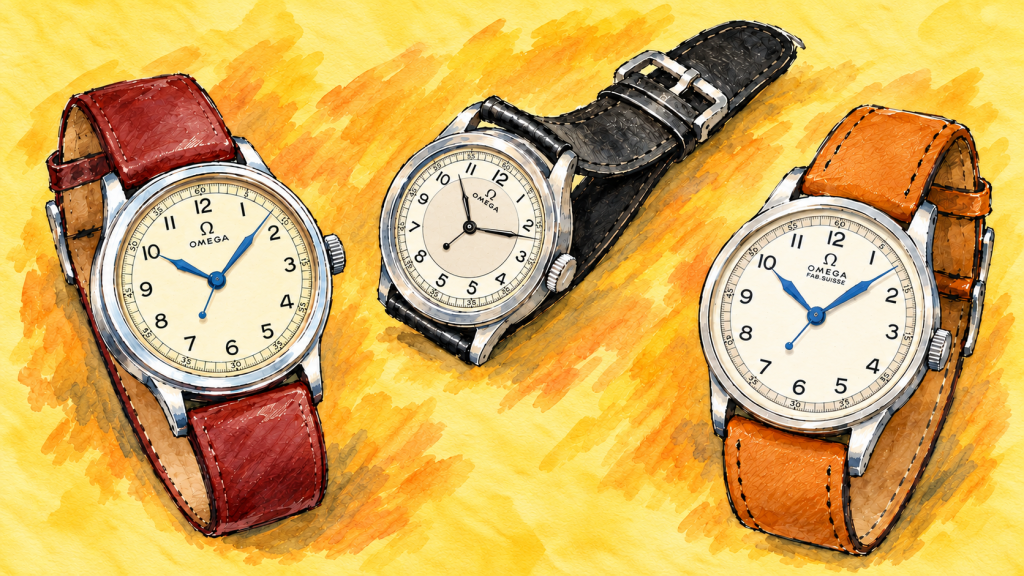
The Medicus was also distinguished by its aesthetic restraint. Examples from the period frequently featured silvered dials, elegant Arabic numerals, slender blued-steel hands, and carefully proportioned cases. These were functional instruments, certainly, but they remained unmistakably products of the sophisticated design language of the 1930s.
The Caliber 23.4 SC
At the heart of the Medicus was, as mentioned, Omega’s manually wound caliber 23.4 SC, a movement whose designation reflected its 23.4-millimeter diameter and seconde centrale configuration.
Introduced in 1936, the caliber was developed alongside a conventional subsidiary-seconds version, replacing the earlier 23.7 family. The center-seconds mechanism required additional components and a somewhat thicker movement architecture, employing an indirect drive from the movement’s third wheel.
Operating at 18,000 vibrations per hour, the caliber was produced in configurations featuring 15 or 17 jewels and incorporated traditional elements of high-quality Swiss movement construction, including a Breguet hairspring and temperature-compensating balance.
Its importance extended well beyond the Medicus itself. The 23.4 family proved remarkably successful, remaining in production through successive iterations until 1959.
For collectors, these early center-seconds movements are particularly compelling. Their construction represents a transitional moment in mechanical watchmaking, when manufacturers were adapting established movement architectures to accommodate the increasingly practical requirements of wristwatch ownership.
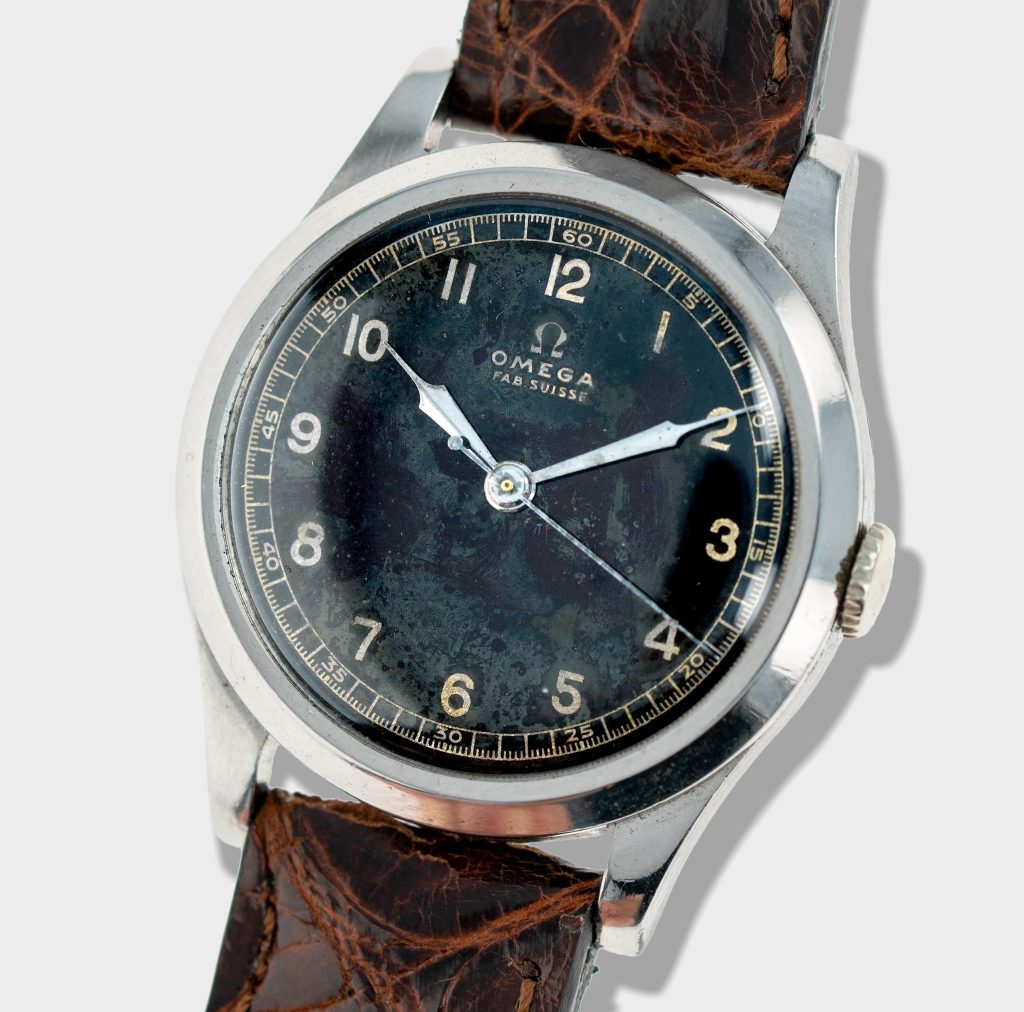
The Naiad: Conquering Water Before the Seamaster
While the Medicus addressed the question of legibility, Omega was simultaneously pursuing another important objective: protecting the delicate mechanics of a wristwatch from moisture.
Water resistance had become an increasingly important concern during the 1920s and 1930s. The wristwatch, unlike its pocket-bound predecessor, was routinely exposed to rain, perspiration, and the hazards of daily activity.
Omega had already demonstrated considerable ingenuity in this field with the introduction of the Marine in 1932. Featuring a patented double-case construction, the Marine was among the earliest commercially available wristwatches specifically designed for underwater use.
However, its unusual architecture was better suited to specialized applications than ordinary daily wear.
In 1937, Omega introduced a more conventional solution: the Naiad.
Named after the freshwater nymphs of Greek mythology, the Naiad represented Omega’s early attempt to incorporate meaningful water resistance into a traditional wristwatch case.
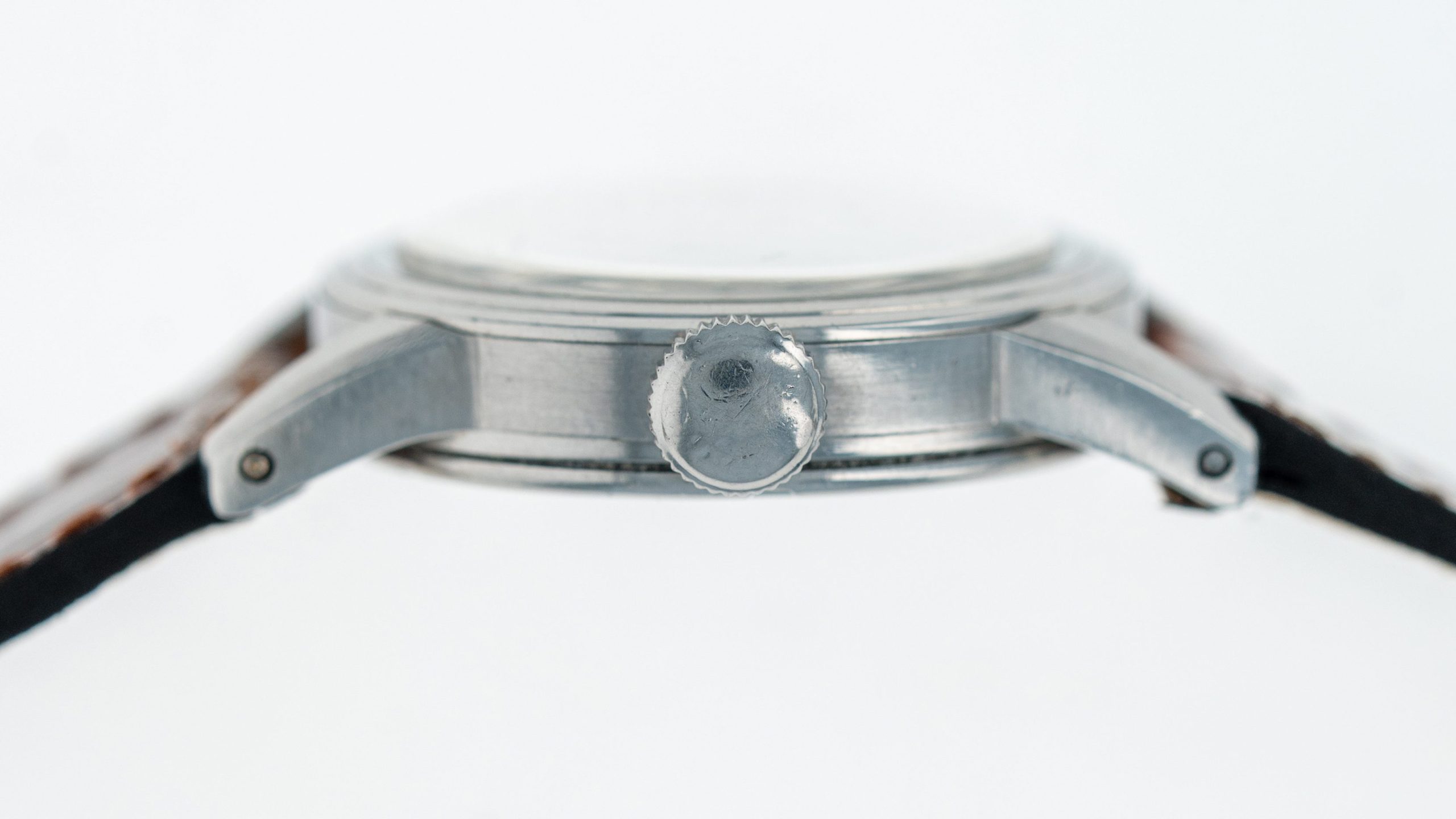
Rather than relying upon the elaborate double-case construction of the Marine, the Naiad employed a pressure-fitted caseback and a specially engineered winding crown incorporating internal sealing gaskets.
The crown was particularly innovative. Designed to seal against the winding-stem tube, its construction used external water pressure to help compress the gasket and improve the seal.
This approach differed fundamentally from the screw-down crown associated with Rolex’s Oyster, allowing Omega to pursue water resistance through an alternative mechanical solution.
The Naiad’s relatively conventional appearance concealed the significance of its engineering. Here was a wristwatch that retained the proportions and elegance of a traditional dress watch while offering improved protection against the elements.
It was an important step toward the modern everyday sports watch.
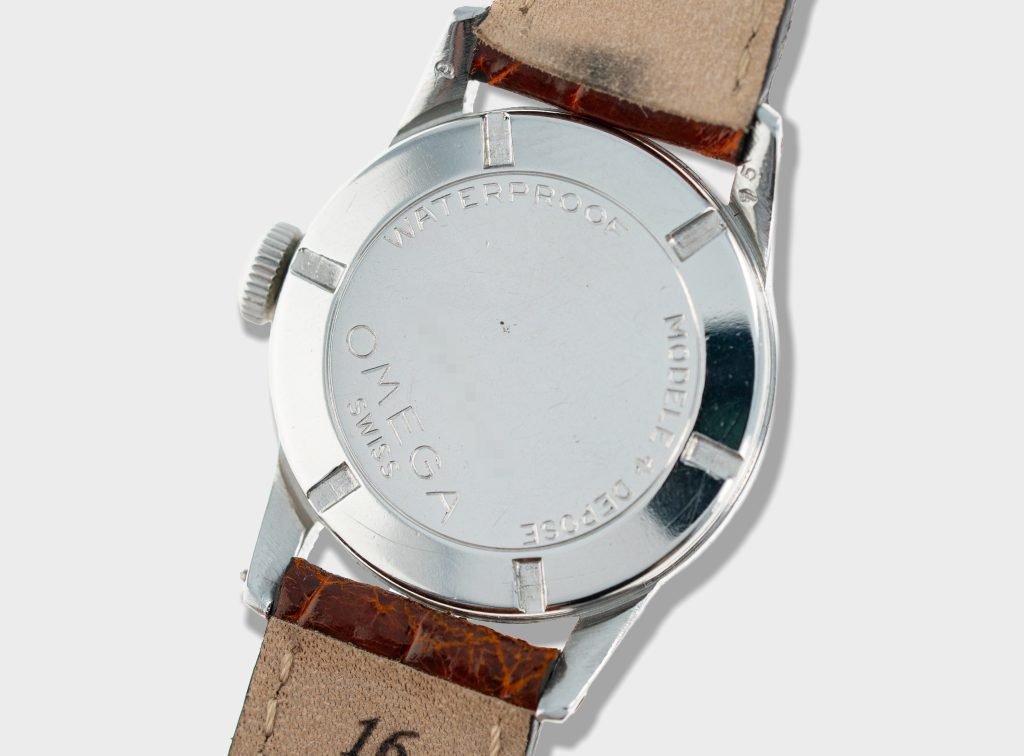
Where the Medicus and Naiad Meet
Perhaps the most interesting watches to emerge from this period are those combining the technical developments of both families.
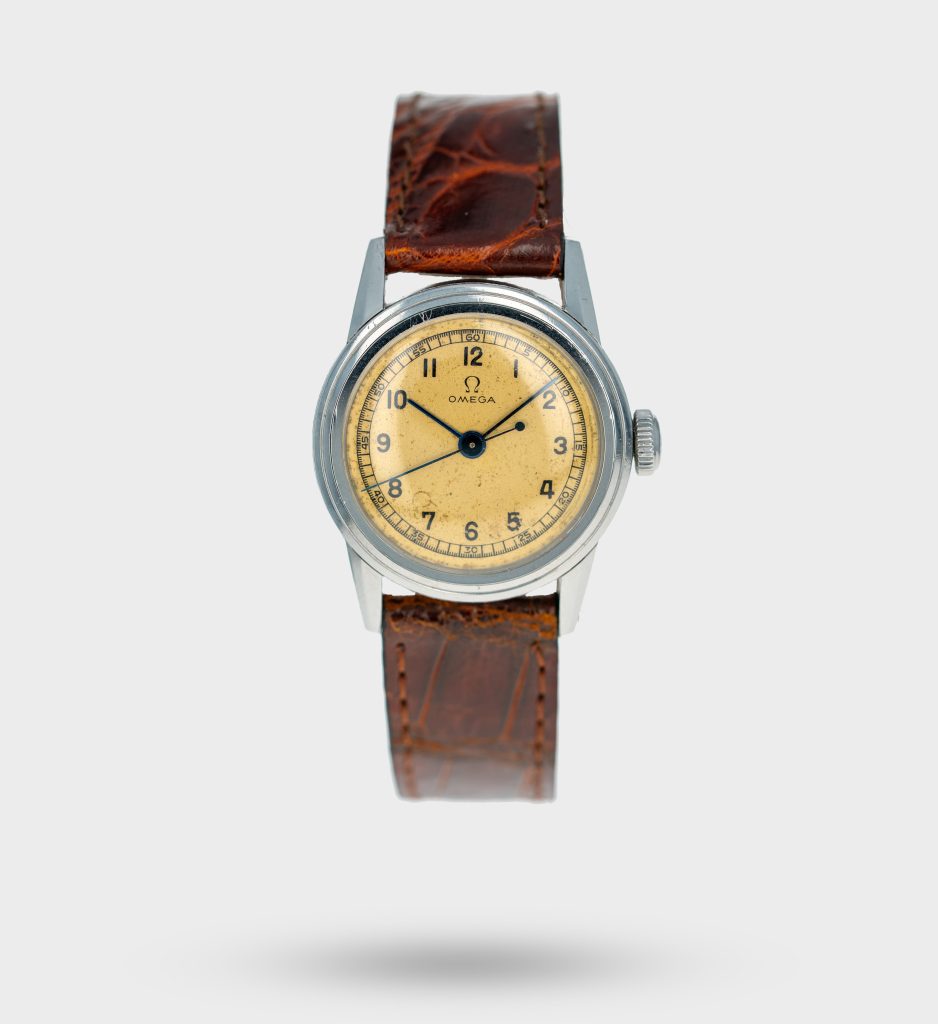
Omega’s historical records identify several Naiad references equipped with the caliber 23.4 SC under the combined designation Naiad-Medicus, including the CK 2064 and references 2110, 2111, and 2120.
These watches united the practical legibility of the centrally mounted seconds hand with the water-resistant architecture of the Naiad case.
The result was an unusually capable wristwatch for the late 1930s.
Although modest by contemporary standards, the combination of a stainless-steel case, improved water resistance, and a clearly legible center-seconds display anticipated many of the characteristics that would later define the modern tool watch.
It is worth noting that the historical application of the Medicus name remains somewhat complicated. While Omega’s modern archives identify several center-seconds Naiad references as Medicus models, some collectors and historians maintain that the designation originally referred more specifically to the earlier rectangular Medicus, notably reference CK 651.
This distinction reflects the sometimes ambiguous nature of historical watch nomenclature, particularly during a period when manufacturers frequently marketed similar movements across numerous case designs and model families.
Nevertheless, the technical relationship between the Medicus and Naiad is unmistakable.
A Lasting Legacy
The importance of these watches becomes particularly apparent when considering Omega’s subsequent development.
In 1948, the manufacturer introduced the Seamaster, a collection that would eventually become synonymous with robust, water-resistant wristwatches. The earliest Seamasters drew upon decades of accumulated experience in case construction and sealing technology, including the principles explored through the Naiad.
Indeed, variations of the Naiad-style crown would continue to appear in Omega watches well into the postwar period.
The Medicus left an equally enduring legacy. Its centrally mounted seconds hand, originally introduced to improve the practical measurement of a patient’s pulse, became one of the defining characteristics of the modern wristwatch.
Omega itself acknowledges the Medicus’s association with medical professionals during the Second World War, when the watches’ legible seconds displays proved useful in hospitals and on the battlefield.
What began as a specialized solution had become a broadly applicable advancement in watchmaking.
An Underappreciated Chapter in Omega’s History
For today’s vintage watch collector, the Naiad and Medicus occupy an especially interesting position.
They predate the established icons of Omega’s postwar catalog, yet embody many of the innovations that would make those later watches possible.
Their appeal is also distinctly aesthetic. The compact steel cases, finely printed dials, expressive Arabic numerals, and elegant blued-steel hands are characteristic of an era when industrial design and traditional watchmaking were finding a new equilibrium.
Surviving examples frequently exhibit the gentle oxidation and patination accumulated over nearly ninety years, lending individuality to watches that were originally conceived as practical instruments.
There is something particularly compelling about these early Omega watches. They were not designed as luxury statements or exercises in mechanical extravagance. Rather, they were conceived to solve specific problems, improving legibility, reliability, and resistance to the elements.
In doing so, they helped establish the foundations upon which much of modern wristwatch design would be built.
The Naiad and Medicus may lack the widespread recognition of the Speedmaster or Seamaster, but their historical importance is considerable. They represent Omega at a moment of remarkable experimentation, when even the smallest mechanical innovation could fundamentally change the relationship between a watch and its wearer.
Nearly a century later, their significance remains as compelling as their understated design.a failure and more like a smart, thoughtful response to its time. Cartier preserved its design language, stayed relevant, and introduced a wider audience to its aesthetic without pretending to be something it was not.
Spencer Gauthier, is the founder of GAUTHIER Watches and editor of GAUTHIER’S Vintage Watches & Culture Magazine.
——