TL;DR
TikTokers like Mike Nouveau dismiss Must de Cartier as compromised and inferior, but that argument falls apart under scrutiny. Must models used the same movements as precious-metal Cartiers, employed durable and honest vermeil cases by design, served as a testing ground for some of Cartier’s most interesting dials, and successfully delivered “beauty for the masses” without losing Cartier’s core identity. These watches did exactly what they were meant to do.
Why the Must de Cartier Debate Keeps Coming Up
Warning. This article doesn’t fall in line with the standard thinking of the WatchTok intelligentsia. It’s about the People’s Tank: the Cartier Must de. Snobs, hold your noses.
Mike Nouveau’s criticism (link) of Must de Cartier lands well online because it echoes familiar collector instincts: solid gold cases maintain their appearance for longer, and of course, scarcity is proof of value. Within that framework, mass-produced Must watches look easy to dismiss.
The problem is that the framework is modern, narrow, and historically inaccurate. Must de Cartier came from a very specific moment, and Cartier’s decisions only make sense when you take that moment seriously.

“Just Vermeil” Misses the Entire Point
One of the most common attacks is that Must watches are “just vermeil,” as if that alone settles the discussion. 18k yellow gold over sterling silver gets framed as a cheap shortcut, or a lesser substitute.
That is not what was happening.
Vermeil was a deliberate design and strategic choice that reflected Cartier’s priorities during the area of the quartz crisis. These watches were never pretending to be solid gold. They were openly, clearly positioned as something different.
And importantly, they were treated with the same seriousness. See why, below:
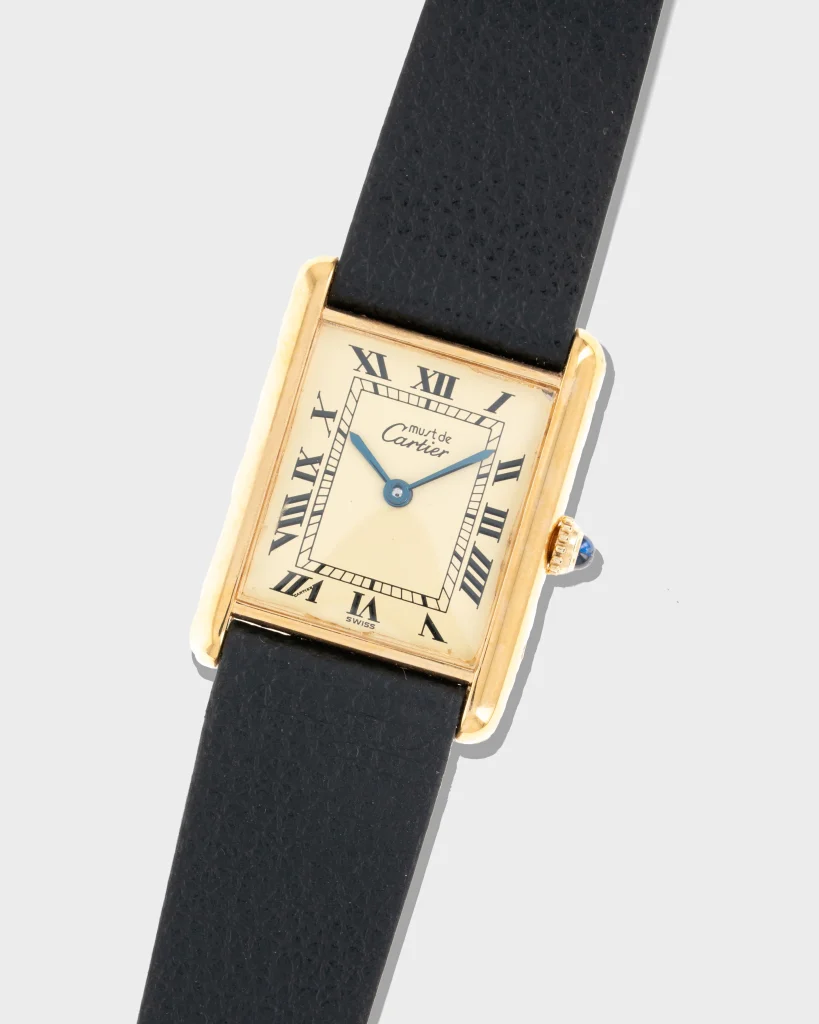
1. Same Movements and Finishing as Precious-Metal Cartier Models
This is where the idea of Must as a second-tier product really starts to fall apart.
Cartier did not reserve inferior movements for Must watches. Must de Cartier pieces use the exact same calibres found in solid-gold Cartier models that now sell for several times the price on the secondary market. The difference was the case material, not the mechanics. If movement quality matters, Must deserves far more credit than it gets.
That means:
- The same engineering
- The same functional standards
- The same Cartier approach to reliability and finishing
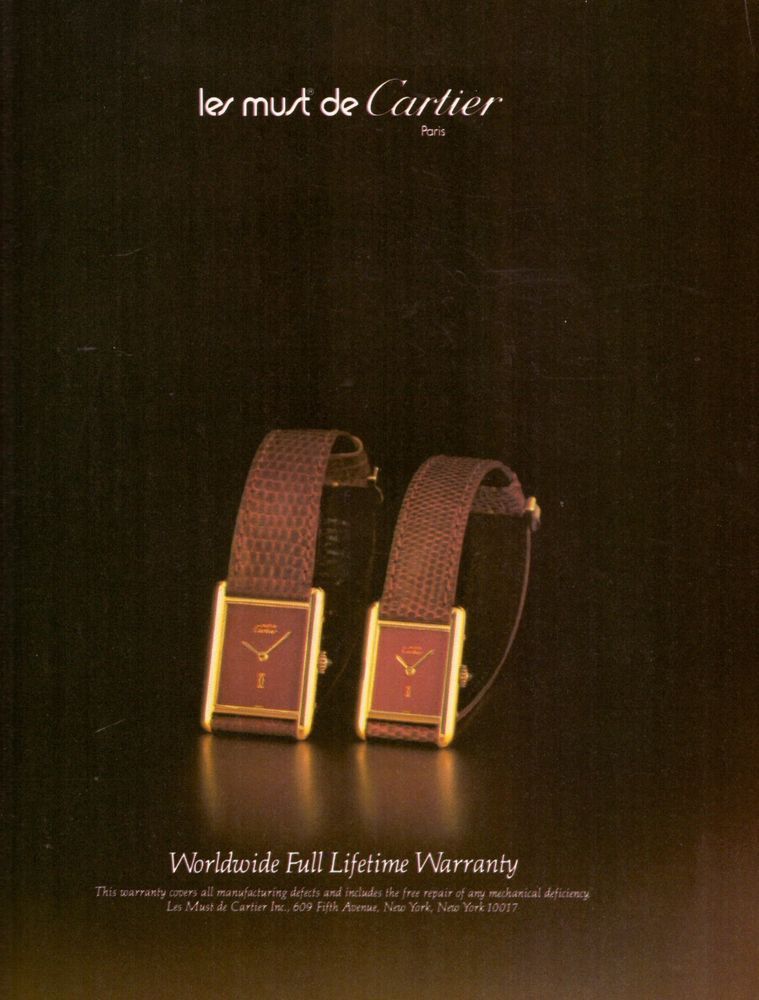
The fact is that “Must de Cartier” was introduced in 1973 not as a downgraded watch line but as a brand-wide lifestyle strategy spanning leather goods, lighters, pens, fragrance, accessories, and watches. Cartier sought to reposition itself as an accessible maison rather than a maker of only ultra-exclusive jewelry. The goal was making Cartier objects attainable: not to produce inferior Tank watches. The use of vermeil (gold-plated sterling silver) in Must cases was actually consistent with Cartier’s longstanding early-20th-century practice across luxury objects like cigarette cases and desk clocks, not just a quartz-era cost-cutting gimmick, and the adoption of quartz movements did not betray any tradition of in-house mechanical purity because Cartier had historically functioned as a design-led house sourcing calibres from makers such as Jaeger-LeCoultre and Audemars Piguet, prioritizing form and dial language over movement manufacture from the outset.
2. Vermeil Was a Feature, Not a Flaw
Vermeil gave Cartier flexibility without sacrificing aesthetics. It allowed the brand to offer precious-metal presence at a lower price point while remaining honest about materials.
This was not thin, flash plating. Cartier’s vermeil is thick and durable. When it wears, replating is:
- Inexpensive
- Reversible
- Faithful to the original finish
Even more interesting is what happens when it is not replated. Exposed sterling silver develops a soft, matte patina that many collectors genuinely appreciate. That kind of aging simply does not exist with base-metal cases.
Instead of degrading, these watches evolve in dynamic and interesting ways as you wear them. That’s the beauty of vintage for me anyway, the patina. Whether it’s a watch, or a canal in Venice.
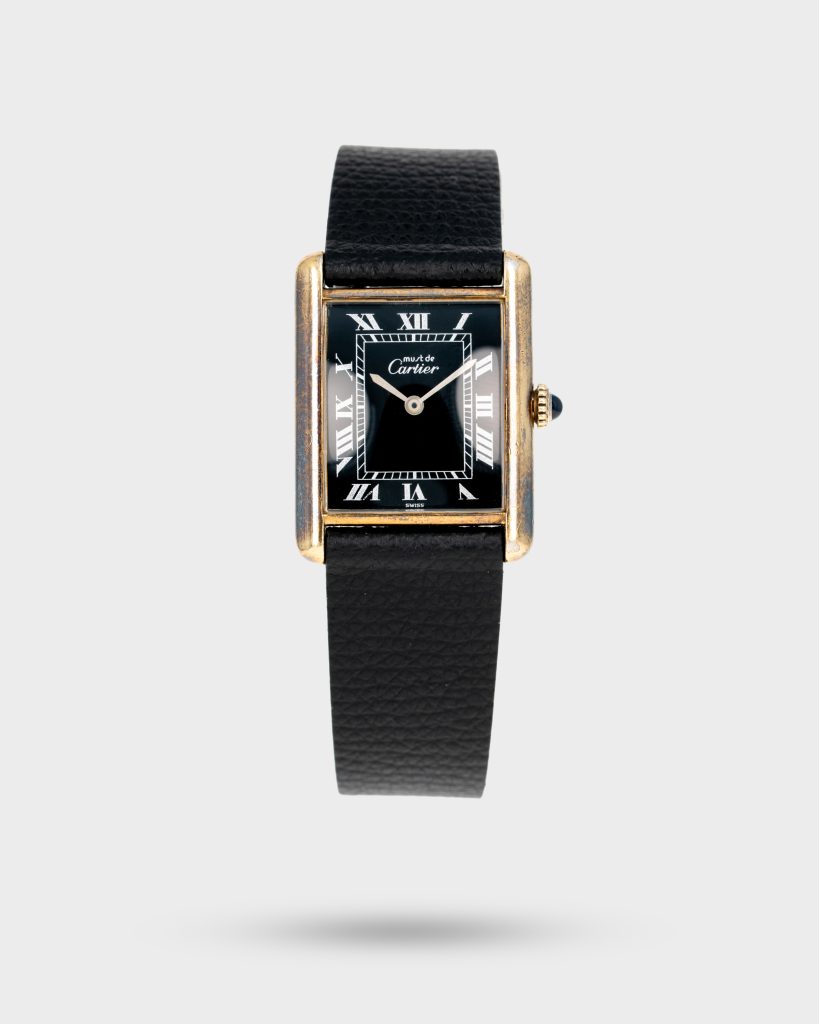
3. A Playground for Experimental, Now-Iconic Dials
Because Must de Cartier was more democratic, Cartier used it as a creative testing ground.
This is where some of the most interesting Must pieces live:
- Saturated lacquer dials
- Roman-numeral-free layouts
- Fully printed or graphic designs
- Bold colors Cartier would never have risked on high-jewelry pieces
Over time, these dials have aged in distinctive ways. Crackled lacquer, softened hues, and subtle spotting are common. These are often labeled flaws, but that misses what makes them compelling.
They give each watch character. No two age exactly the same.
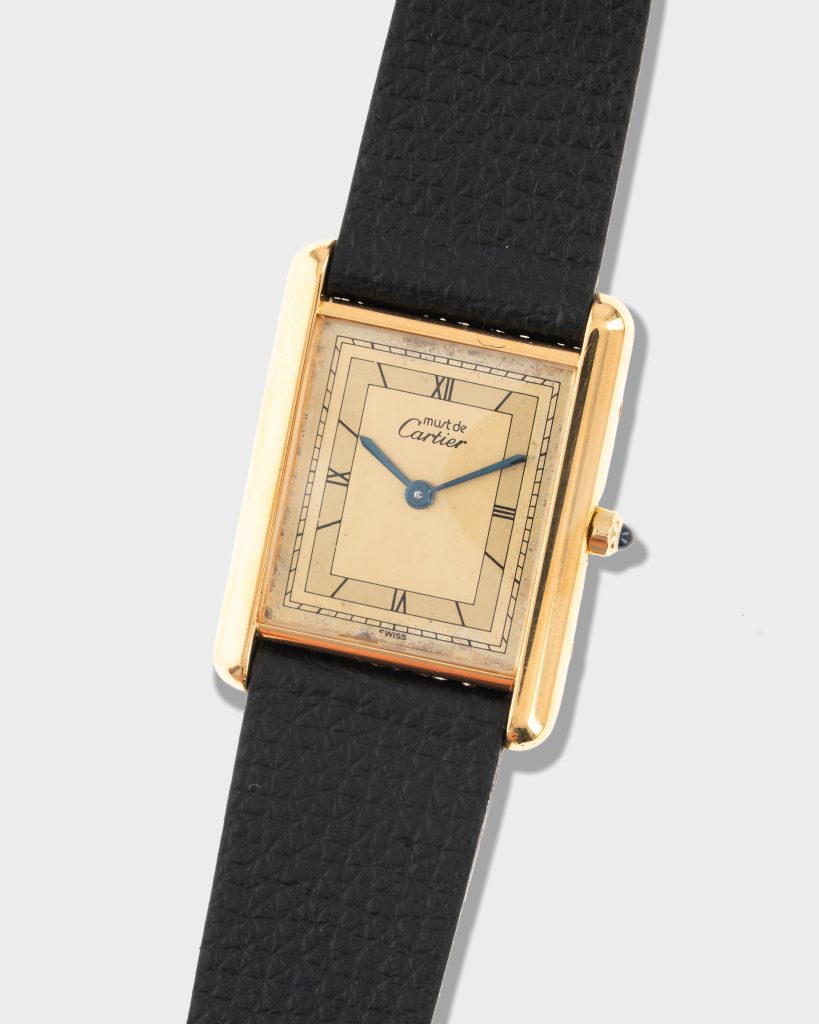
4. “Beauty for the Masses” Was the Point
Cartier was not cutting corners. They were opening the door.
Must de Cartier was built around a simple idea: elegance should not be reserved for a tiny group of buyers. The watches retain unmistakable Cartier DNA while remaining approachable.
In that sense, Must de Cartier is almost idealistic. It treats design as something to be shared, not guarded. That philosophy is rare in luxury, but it is hard to argue that it is a bad one.

Where Mike Nouveau’s Argument Breaks Down
Mike Nouveau’s critique assumes a few things:
- Mechanical movements are always superior
- Un-plated metals are the only legitimate case materials
- Exclusivity defines value
But those are preferences, not facts. And there are plenty of mechanical Must de Tanks out there to enjoy, if you’re not a fan of the convenience of Quartz.
Once you remove those attacks, the Must de Cartier line looks less like a failure and more like a smart, thoughtful response to its time. Cartier preserved its design language, stayed relevant, and introduced a wider audience to its aesthetic without pretending to be something it was not.
Final Thought
Must de Cartier is not perfect, and it does not need to be.
It is:
- Legitimate Cartier and incredible value
- Mechanically serious
- Thoughtfully designed
- Historically important
- Rich with personality and variation
Calling it “bad Cartier” says more about modern watch discourse and content-driven hot takes than it does about the watches themselves.
If you care about intent, design, and context, Must de Cartier deserves real respect, even if Mike Nouveau disagrees.
Spencer Gauthier, is the founder of GAUTHIER Watches and editor of GAUTHIER’S Vintage Watches & Culture Magazine.
——